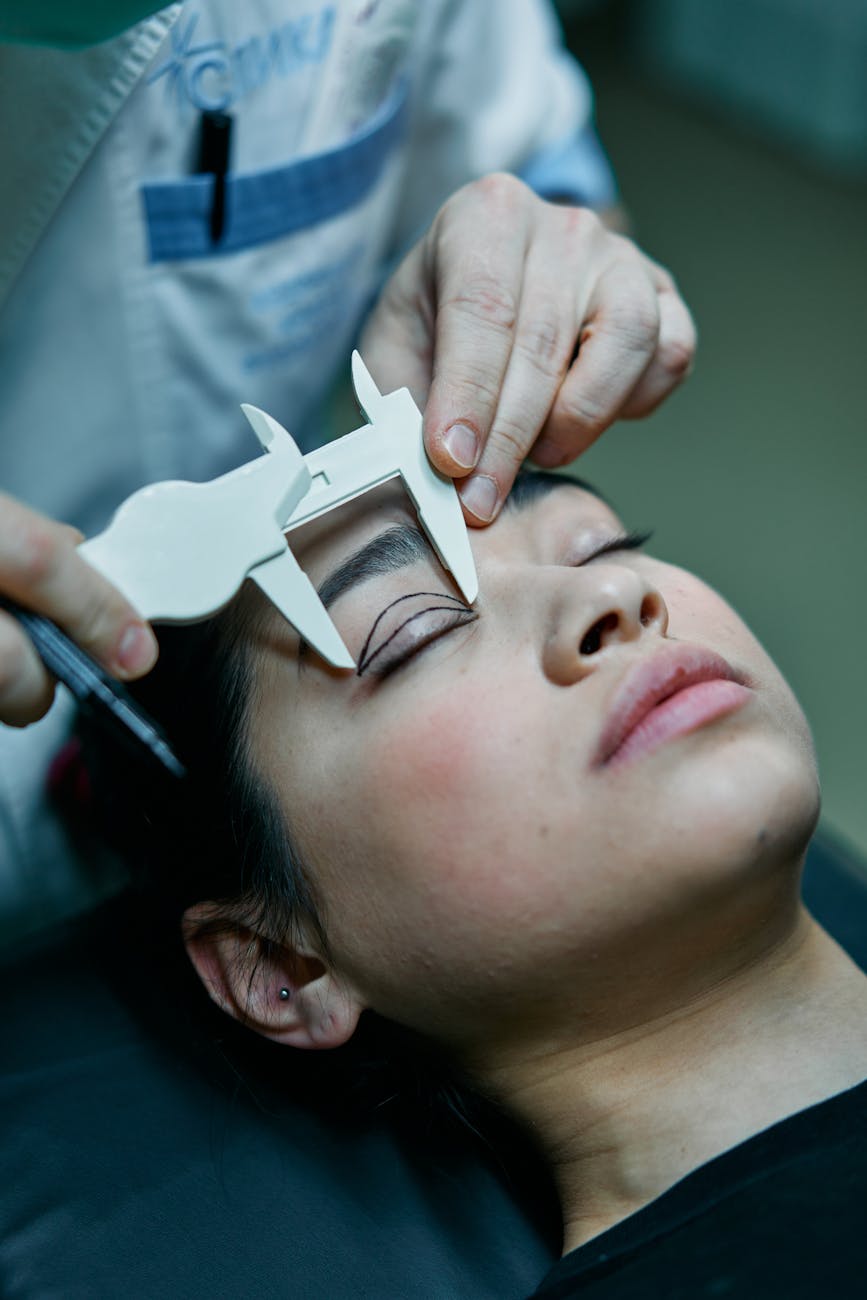
Interviewed by Zheng Fu on November 13, 2023 for the Fall 2023 SKAT Newsletter

Alka V. Menon is Assistant Professor of Sociology at Yale University, and the author of Refashioning Race: How Global Cosmetic Surgery Crafts New Beauty Standards (University of California Press, 2023).
Zheng: I want to start with the question about the (perception of) mixed race in different contexts that speaks to me personally. I think in East Asian contexts (especially in China), there are a lot of rhetoric that valorize a mixed-race look, especially mixed white and East Asian looks. I found it interesting that mixed race look is mostly a problem for surgeons in the United States: mixed race look leads to a mismatch which further causes confusions and perceived boundary violations. I wonder to what extent this problematization of mixed-race look is a matter of expertise? Is it the case that mixed race look is popular among patients, and it’s just the experts who do the gatekeeping that find it problematic? Or is it more about how the discourse about race is structured in the United States in general that problematizes mixed race look?
Alka: I think it is something about the larger discourse on race in the United States leading to this falling through the cracks. It’s also that there’s different hybrid categories in the US. In terms of the most common mixtures, certainly, white and Asian is up there in terms of interracial marriages, and potentially mixed-race kids. But it’s not what would pop to surgeons’ minds. So I think that it’s a kind of byproduct (of general racial discourse). I mean, in a place like Hawaii, within the US, where the demographic profile is very different, there has been a much longer conversation about the in between. And some of the early calls to complicate the single white ideal, and to think about procedures that would be appealing to people of Asian heritage came from surgeons who were practicing in Hawaii. So there’s something about which mixes are imagined. And the logics that are driving (the discourse in the US) are really about maintaining the difference between black and white people. As the US diversifies, and there’s other possible mixtures, there’s other ways that this could play out.
Zheng: So you’re saying that different types of mixtures leads to different types of reactions, some mixtures might be more guarded than others?
Alka: Yes, it was about what kinds of racial boundary crossing feel like more of a boundary transgression or more problematic. I found that US surgeons are generally advocating that patients improve their appearance while retaining racial legibility, what I call ethnic preservation (borrowing from their terminology). This general rule precludes the discussion of racial hybridity or mixture as something that they would want to work on. But mixed race did come up in two different ways. One is the problem of mixed race people and how cosmetic surgeons can potentially, in their words, “correct” features that seem like mismatches. And then the other way that it comes up is surgeons saying, “well, mixed people are the most beautiful people. But we can’t presume to create what nature mixes and we simply admire them. We are mere technicians.” There’s an asymmetry of course, what’s happening there. But the overarching discourse of ethnic preservation means that this is not on top of the mind of what they’re offering.
Zheng: The comparison here is also very interesting with Malaysia. The way I read it, some of the looks, especially the Korean look, actually involves certain element of mixed races but it’s not discussed in the same way, it’s not discussed in a racial way. Is that the right interpretation?
Alka: What I’m saying is that the narrative really does matter for this. The Korean look had some features that resembled the features of mixed race people, especially for eyelid looks. But the Korean look was about showing that cosmetic surgery has been done, creating an “obvious” look, something where surgery is pushing the envelope of what it’s possible to look like. And so what was so interesting to me is how you can imagine different narratives for the same end look. What surgeons are doing is that they are (not only) evaluating (whether) the end product is something they want to be associated with. They’re also evaluating the story that patients are coming to them, of potential transformation. The story that links to a Korean look involves the increasing popularity of Korean culture and popular cultural products, from dramas to music. And so that story is a very different one than one that focuses on white American pop artists. But if the look is similar (and I don’t think they’re identical), the story that people are giving to it, the narratives of transformation, are important to pay attention to because it indexes something about the relative value of these labels are, and that people want to be associated with the Korean trajectory. And in the Malaysian context, I found some evidence that it wasn’t just surgeons steering patients away from whiteness; patients also saw whiteness as being in the past.
Zheng: In your research, do you find there’s usually a mismatch between the stories that patients want to tell and the stories that the surgeons are looking for? Or is there a certain type of accepted rhetoric that everybody draws on in each culture?
Alka: There’s certainly accepted rhetoric that people draw on. One example of that is that people should invest in how they look, that you can put your best foot forward, and that paying attention to your appearance is especially important for some professions where it’s material to advancement, for example, if you’re a television anchor, or a model. So there’s some widely available cultural rhetoric. And then there’s what a patient brings into a room with a surgeon about a specific thing they want to change about their body. And I witnessed some initial consultations between patients and surgeons, but I definitely have much more data on what surgeons perceive of these narratives.
But between the surgeon and the patient, there’s a negotiation that’s happening between the narrative that the patient wants to tell (and) what the surgeon wants to do, both from a matter of what they want to be associated with aesthetically, but also from what they think is a good idea clinically. And that there’s simultaneously an evaluation of is this thing that the patient is asking for? Can it be done through surgery? Can s/he be made satisfied with this statement of their requests or this context for their requests? Some of that is a translation exercise : Are we understanding this request is the same thing: It’s hard to do this in words. It’s also hard to translate what does “natural” look like into the body. So they move to the train of images to accomplish this in initial consultations. But I think patients do give some thought about the narrative that they want for this, for themselves, and the narrative that they’ll tell surgeons about what they want. They do see those as potentially needing to be different, particularly if they’ve had interactions with multiple surgeons and are deciding who’s the best fit.
Zheng: Another very important point that you’re making in the book: although so much about race is actually about phenotype, it is understudied in the literature, to my limited reading experience. You bring this to the forefront: how does look, which is so essential to how we identify race, is being shaped. So I want to hear you explain a little bit more about the role of the expertise of the plastic surgeons in terms of how they determine what different racial look is accepted and what is not, and especially how they guard boundaries in different contexts.
Alka: I picked cosmetic surgery because it did have this nice aspect where cosmetic surgeons are centrally concerned with the surface of people’s bodies, how people look to other people with this appraisal element. I was doing this research at a time when the concerns about rebiologization were really about what genetics and genomics would do, animating old racial hierarchies and racial ideas. And so to me, it remained an empirical question, whether the phenotypic associations with the body and racial markers were going to change as this genetic rebiologization was simultaneously happening. And so cosmetic surgery was a really great place to test that.
But what’s so interesting about surgeons is that the expertise that they claim is not just about what they can do on the body, it’s also about what they should do on the body from the standpoint of cultural and social legibility. That’s why I emphasized the role of surgeons as intermediaries between widely circulating ideas that are very abstract about specific beauty ideals, like the white beauty ideal, the Asian beauty ideal, these different abstract representations and bodies. Every single body has individual challenges, right? So how do you, can you make that ideal legible on some given body? And then should you? Based on what else is happening in their life and what communities that they’re a part of? Surgeons evaluate that narrative of transformation. Surgeons literally called themselves amateur sociologists. The book starts with a quote from a surgeon saying, “someone of a given ethnicity walks into our clinic, and we know what they want.” That’s a claim about generalizations or stereotypes based on their experiences with different racial or ethnic groups.
Zheng: Can you explain a little bit more about how that differs, in the US and Malaysia? And how, and what kind of historical background would shape that difference?
Alka: Overall, cosmetic surgeons act as gatekeepers to ideal racially illegible appearances in both countries. But in the US, the goal or norm that really emerged was one of ethnic preservation, which is making members of racial or ethnic group look better within an existing category, but not crossing racial boundaries in the perception of the patient. And they argued for a natural look. Crossing racial boundaries would lead to the possibility of an artificial or fake look. In Malaysia, I thought initially that I would see something pretty similar, that Malaysian surgeons would come up with the racial ideals that would match the groups that were recognized in the population, specifically Malays, Chinese and Indians. And the idea would be that there was one beauty ideal for each of these groups, and people will want slightly different procedures, but everyone should stay in their lane.. Instead, what I found was that Malaysian surgeons also heralded the importance of a natural look, but set it as the opposite of an artificial or fake Western look. That was the common framing of what they were doing there. And so, then the question became for me, what’s Asian? Why is this the goal as opposed to the racial groups that are enshrined in the Malaysian constitution? These are recognized by people as legible based on what people wear, what they look like, what languages they speak. Race in Malaysia is something that individual people feel like they can appraise in the same way that in the United States, people can look and guess what group someone belongs to. And in both places, there isn’t this idea that you can casually switch back and forth between groups; these are discrete entities. I was puzzled initially about what was going on with the emergence of the Asian look, and it became clear, Malaysia is a smaller market for cosmetic surgery than the United States. We’re talking closer to the order of 30 million people. But it’s situated in an area where it can attract medical tourism from potentially enormous markets, from China, from India, from New Zealand and Australia, from Indonesia. These are potentially very different markets in terms of the kinds of ideals that people are looking for.
It’s not just that people might want different ideals. They might also have other concerns that needs to be met as part of surgery. So Malaysian surgeons were interested in certainly having staff on hand who spoke languages that would be relevant for people from these different countries. But they also wanted to make sure that the food was halal and the hospital stay afterwards for Muslim patients. This was a consideration within Malaysia, but could also make them more inviting to medical tourists who are Muslim from Indonesia, or from the Middle East. They had a set of cultural understandings of what it meant to change the body and what felt like it was pushing too far, about what would be desirable to change that they felt were shared in different Asian countries especially and that were not shared by medical tourists from New Zealand and Australia, or from the United States. At some point, a Malaysian surgeon said to me, “you are American with Indian heritage. But if you had come to me from India, I might have suggested a slightly different look if you were going back to India, or if you were gonna stay here in Malaysia.” They attended to how people would read your body and what it would mean to modify your body in these ways. And so I think that Malaysia was really thinking at this regional scale, and potentially global scale about what beauty ideals meant. This development of a natural Asian look positioned them in a regional context, as differentiated from South Korea, which was associated with a very specific artificial or done look, or from places like Thailand. Malaysian surgeons would say, “we’re going to be conservative, we’re going to do something that looks like you could have been born with it.” And that’s for them what this natural Asian, Asian look accomplished. And so this is talking about race, but at a different scale that was not limited to the racial groups in Malaysia, they wanted to be more broadly legible.
Zheng: But then, even within Asia, you have East Asian, you have Southeast Asian and Muslims. So what does that (Asian) look mean?
Alka: That’s the beauty of it. There’s always considerable potential variation within any of the racial categories that we’re talking about. Many things could fall under an Asian look and an Asian approach. It could be negotiated on a case-by-case basis. It had enough meaning to indicate incremental change, as opposed to a dramatic transformation. But from there, it could really be operationalized in different ways. And so there’s examples within the book that surgeons will try to put a number eyelid height, for example, saying this number is Asian, and that number is Western. But the in between doesn’t fit so nicely into one racial category or another. Racial categories have that subjectivity and variation in them, such that they’re a launching point for a set of orientations and meanings for what one wants to accomplish with surgery as opposed to fixed points.
Zheng: Yeah, and also, I was just thinking about how the Malaysian surgeons have this awareness of even with the same ancestry, you will look different, in different cultures?
Alka: That was what was so different from some of the conversations around the rebiologization of race. Surgeons are not saying you are stuck with the body you’re born with forever, no matter what. They’re saying the same body in different societies or cultures will be regarded differently. And that they need to take that into account when deciding what is an appropriate surgical intervention.
Zheng: Yeah, this is so beautiful. Which also leads me to the question of how you came to this comparative case. How did you decide on which case to pick? Why Malaysia? Why US?
Alka: So I think that the US was historically very central to the development of modern cosmetic surgery. And it’s a very big market in its own right. I started the project by looking at journal articles published by cosmetic surgeons about nose jobs. All of them that I sampled were in English, most of those were written by authors based in the United States. And so it seems like if I was interested in the story about race and cosmetic surgery, even a kind of larger perspective, the US was not a bad place to touch down. In looking for a comparison site, I wanted a place that was like the US in claiming a certain amount of conservatism, which excluded cutting edge markets like South Korea and Brazil, that were trying to push the envelopes about what is possible to do with the human body. I also wanted a place with a similar racial logic, racial structure, in which racial categories were seen as discrete entities rather than on a continuum, like in much of Latin America. I settled upon within Asia with this idea that this is an emerging area of expertise and growth market, and piloted research in Singapore and Malaysia. During that pilot fieldwork I found the Malaysian cosmetic surgeons more receptive. That initial fieldwork experience made it clear that there was something to be said about what was happening in Asia and a reorientation with Asia. And it helped that Malaysia, like the US, was not trying to push the envelope in cosmetic surgery innovation, but was trying to differentiate itself from its neighbors, and to be part of a project of rising regional expertise and the creation of a regional market.
Zheng: And it’s very, very insightful. I was also thinking about what you’re just saying about you could have compared a different set of countries investigating different racial dynamics. It really comes down to a question about whatever you’re trying to achieve in a comparative project. It’s very hard when you’re trying to do this cross-country comparison. There’s just so many different ways that you could have made a contribution.
Alka: An important thing to note here is that I have family connections to Malaysia; it was on my radar, though I had never visited before. I knew that this was a place that there were different Asian ethnicities, where multiculturalism and multiracialism were central to the modern post-colonial Malaysian state. So I knew that going in, enough to have a hunch that people might talk about this or might be willing to talk about this. What also appealed to me about the US and Malaysia is I wanted to compare I wanted this to be a global story. The comparison between the US and Malaysia is asymmetrical, but they’re both implicated in this global network, participating in international conferences, along with these big innovators like Brazil and South Korea.
Zheng: Because the Malaysian doctors are on the periphery, they actually want to make the effort in trying to have a conversation with those who are at the center.
Alka: Another way to think about this that the US or Brazil are so big, you can tell a very interesting story about cosmetic surgery in each of those countries, and people like Sander Gilman, Alexander Edmonds and Alvaro Jarrin have: what the racial logics and histories are that led to people wanting to look some way. For Malaysian surgeons to have relevance professionally, but also to have a robust business and potential market, they had to look outwards, they had to look to medical travelers and international interlocutors. And so they had to engage with the literature and they were part of this larger project. And that opened up for me this larger set of exchanges, of which big countries are a part, but so are small countries all over.
Zheng: Maybe those on the periphery are the ones who are really trying to building these Global Connections instead of just inward facing? And maybe the most innovative acts are emerging from the periphery?
Alka: Well, part of the reason I picked a place like Malaysia and the United States is because they claimed not to be innovative. Cosmetic surgeons claimed to be conservatively reenacting the status quo. The promise of a natural look is one that erases the possibility of cosmetic surgery from your mind. That’s not what Brazil is aiming for, as a country that has really pushed plastic surgery as a part of its national identity, or South Korea to where this is part of its national identity.
Zheng: That’s a good point. Do you think your own presentation in the field work impacted what you were able to observe, especially in this field site that is all about self-presentation? How your own identity impacted (what you could see in the field)?
Alka: I tried to keep track of this in terms of how I dressed when I would go into meet surgeons at their clinics, with a special eye towards how I would look in the waiting room. I knew I’d be spending time in these places, and I wanted to blend in and be unobtrusive because I wanted to observe as much as possible. That was the concrete goal. So that meant dressing more professionally and with an eye to the feminine, wearing a skirt and blouse, light makeup. I was not someone who had deep experience in beauty culture that I was drawing upon, I was really kind of learning on the fly as part of this project. And surgeons did use my physical features as an example, always in a way that was complimentary. Like, “Sometimes people want greater eye spacing, like yours.” Not “Patients with noses like yours tend to want them smaller,” which would be true, but they never said anything like that. They were paying attention. And surgeons used their own bodies and features as examples too.
Surgeons would sometimes ask me about my racial heritage afterwards. I left it open that at the end of the interview, if you have questions for me, I’m happy to answer them. So I thought about these things. But how surgeons related to me was less in the mode of prospective patient and more as a medical student, someone who might become a plastic surgeon. That was how they talked to me. I think it helped my access to be a graduate student.
Zheng: It must be interesting to talk to these experts who are very self-reflexive about the language that they use and how they’re being perceived. And do you think that self-reflexivity makes it difficult for you to penetrate? Maybe they’re trying to, like put on a performance for you?
Alka: I think that surgeons are putting on a performance for everyone. I think that they would recognize this, that that’s part of what’s going on, but they will they talk about it in the language of: they’re trying to build rapport with patients. And so they’re trying to assess what the basis for connection is. I’ve written in a paper about this emotional component and about the attempts to forge these connections and different styles of doing so. Because there’s feelings that go into it, surgeons want to make people feel better. I think it could be hard to get someone to reflect about something they’ve never thought about before. But I don’t think it was because they didn’t want to put down the mask; I think it was, they’d never thought about it before. I do also think, though, that many of the people who agreed to interviews with me, did feel like they had something they did want to say. And nobody was hemming and hawing, plastic surgeons pride themselves on being blunt. So, either they had something to say about what I asked or they had something else they wanted to say.
With some surgeons, and especially at these conferences, I could hang out with the same person for a long time versus other scenarios where it’s, you know, 45-minute interview in their office, and then a patient’s coming in, so I’m out. That’s where the basis of the comparison of, are these people saying the same things or these are different stories emerging across these interview types? And I didn’t see that. Seeing surgeons interact with other surgeons, interacting with people they knew, they were still talking about some of the same things I was seeing in these 45 minute more circumscribed encounters.
Zheng: Do you have any suggestions for people who are doing like ethnography on experts?
Alka: That’s a great question. It’s important to do your homework and to learn some of the terminology, the debates in the fields beforehand. That helps set up a baseline where experts might get into the nitty gritty of what you might miss in the debates otherwise. If there’s textbooks available, I read those, I read journal articles beyond the ones I was analyzing for the book; I was trying to understand a worldview. But of course, the expertise you get printed in the books is not necessarily the same thing as what people do in practice. And so that, for me, was a useful starting place to ask about, you know, do you use these things? What’s wrong about them? What would you change about them? Is that a way to open up a broader conversation about? What they learned in medical school and what they didn’t learn was another thing that I would ask them.
The big challenge in interviewing experts is gaining access to them. It was important in this case that I was affiliated with a medical school, I was teaching medical students, an elective medical humanities course. And I was a teaching assistant on a medical ethics course. So I could say, I plan to share these results with medical students who are going to go on to become doctors and that I was interested in disseminating this to doctors, future doctors. And that really resonated with this kind of expert. Recruiting through professional societies can be useful useful, because they have membership rolls, and they have events, that’s places you can find people and that you can stick around and learn the lingo. But depending on the field of expertise, it’s very expensive to gain access to these spaces, or it’s not possible.
So persistence is the last thing. You send emails and letters and whatever recruitment that you agree ahead of time with the IRB up to the limit, right? You really might need to call someone three times. And you might have to hang out all day until they’re free the end of the day, to be willing to chat for 30 minutes on their way to the car. So I’ll say be prepared for a lot of rejection. But I think with persistence, it can be worth it.
Zheng: So how’s the conversation going? Talking your research results to the medical (professionals)?
Alka: I’ve given grand rounds to plastic surgery departments. I’ve found this is a really useful example to teach with for medical students and for undergraduates. Because it’s so clear, people are talking about what a nose looks like. Or surgeons are talking about the importance of someone’s cultural comfort with intervening on the body, about making cuts or putting material in the body. So there’s something really concrete about this example when it comes to the social construction of the body, the social construction of race, the social construction of health and illness. It enables you to get to a more complicated conversation, I think a little bit more quickly. So I think the reception has been fruitful. And, and I think people, from very different kinds of fields of expertise, are able to engage with the example and get something out of it.
Zheng: Do you think people are changing their practice because of your work and the lessons you have drawn from your work and your conversations with them?
Alka: I don’t know. Maybe it’s too soon to say. I’ve had conversations about the use of racial categories in medicine, especially after the 2020 protests sparked by George Floyd’s murder. At that point everybody, including doctors, was engaging in self-questioning about taking for granted organizational practices and ways that people had been operating. So I think there was an openness to conversation and reflection, but also a realization. And I think that’s something that comes through in the book, too, that there’s not one, one easy thing that you can do that will make this right. That this is complicated, and that when you change one thing, something else also changes at the same time. So there’s many moving parts. It’s a bigger conversation. There are things that the book identifies that would improve the patient’s experience. There are things that surgeons could look through that they could identify as stressors in their life, that cause them to be unhappy or things they don’t want to do or feel like should not be done, that are bad for the field. So those things are definitely there. But the book surfaces the problems rather than (provides) a neat solution for them. And it’s more of an opportunity for people to think through: Okay, if we also see these as things that we don’t want, what can we do if we can all see them in the same way. How do we act on that?
Zheng: Final question: what is your next project?
Alka: What I’m working on right now is a project that is very different. That’s about AI and standards for what we want to know about it and what trust might look like going forward for these systems. This is a collaboration with computer scientists and doctors and folks in public health. But it’s pretty disembodied. I’m also looking for opportunities to test the transnational and scalar framework that I’ve built in the first book and perhaps see what more we can glean from this kind of asymmetric approach to comparisons. I’m interested in this new class of drugs called GLP-1 receptors, like Wegovy or Ozempic, that have been approved recently as weight loss drugs, after an initial career as diabetes drugs. They have sparked a firestorm of cultural conversation in the United States about how it could destabilize how we think about obesity, and how they might chip away at racial health disparities. But that’s the US. What might it look like in another country, with different healthcare structures and different cultural conversations about who’s fat?
Zheng: That’s so exciting. Thank you for talking with us.
 Welcome to the official website of the Science, Knowledge, and Technology (SKAT) Section
Leave a comment