
Interviewed on February 23, 2024 by Larry Au for the SKAT Spring 2024 Newsletter
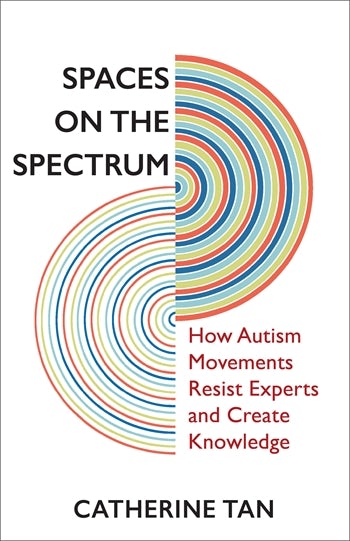
Catherine Tan is an Assistant Professor of Sociology at Vassar College. She is the author of Spaces on the Spectrum: How Autism Movements Resist Experts and Create Knowledge (Columbia University Press, 2024).
Larry: First off, I really enjoyed reading the book! It is written with such an eye for detail and captures the voices of your many interlocutors very well. I could also see you in the field: chatting with NFL athletes, going to conference afterparties, observing doctor visits, etc. Could you tell us how you started work on this topic?
Catherine: In the beginning, I became interested in autism because back in college, I was babysitting a child who is autistic. I had never worked, at that point, with disabled people before. But in that process, I got to know this family really well, and I got to know this child really well. I had mentioned in the preface that working with this family, didn’t really teach me much about autism. It just taught me about this particular family and this particular child and the sort of challenges that they encountered while they were navigating services and thinking about the future and what that was going to look for him. The pseudonym I used was Mickey. So, at that time, Mickey was quite young. He must have been seven or eight. He would be what some people would consider “low functioning”. He was non-verbal. He did not have much sign communication. He had a lot of stimming, which is, repetitive motions and fixations. But he was really fun, and I would slide him around the house, or we would go to the park. And I would just take him and hang out with my friends. It was great. But I think understanding what his parents were going through and thinking about what was going to happen to him in the future, I became really interested in autism from a sociological perspective.
Later, during undergrad, I trained to become a behavioral therapist, which I now really regret because I don’t agree with that methodology at all. We used applied behavior analysis. It’s a fairly popular approach that was fairly common to educating autistic kids. But it’s controversial among autistic people and other critics who argue that it’s not a helpful intervention. I did that for a couple of years, during the last year of college and then for the first year after I was out of college. I realized after that this was really not for me. Even when I was in the job, I knew that this was not really what I wanted to do. However, I was still really interested in this topic from a sociological viewpoint. So when I got to grad school, Peter Conrad, who was my advisor suggested that we look at these different movement groups online and write a book chapter on it. So we did that for an edited volume. We compared the online presence of anti-vax parents, the autistic rights and neurodiversity groups, and also the more mainstream groups like Autism Speaks. We did that and it was a little rough, because, at that point, we were both so new to it. After we completed that book chapter, I wanted to turn this into my dissertation, but I would just compare the two groups that were challenging experts. And so that’s how it started.
Larry: This is a book about contentious knowledge. As with the case with many types of contentious knowledge, there are high-stakes and heated disagreement over who gets to make authoritative claims. Additionally, as you capture, there is also a lot of animosity between the different actors that you talk to, as well as distrust towards outside researchers. How did you navigate this fraught terrain methodologically?
Catherine: When I first started, it was really difficult to get into the organizations that made up the alternative biomedical movement. And it was not difficult at all to get into the autistic rights movement organizations. For the alternative biomedical groups, I emailed a couple of organizations. Some people were really against having me come observe conferences or even try to recruit through their organization, because they’ve been screwed over by a lot of journalists in the past—not so much researchers because there were fewer—but a lot of journalists would talk about how they’re all about anti-vax and how it’s all pseudoscience and quackery. They didn’t want that to happen again. That’s one thing. The other thing is that I was kind of naive when they asked me what my research project was about. It was my first big project and my second time doing something solo. I said, “Oh, you know, I’m comparing different movements around autism”. And they’re like, “We don’t want to be compared to other groups because by doing that, you’re saying that we are wrong and they are right.” And so, I had to revisit how I solicited my participants. Eventually I had someone from Generation Rescue who was sympathetic to me and was interested in the project. We talked a little bit over the phone and we agreed that I would come out to California and I would interview her in person. From there, she invited me to their first annual conference. Once people meet you in person, they realize the researcher is not scary in fact, the researcher is just a student. People start to relax a little bit. So that was how I got my first in.
On conflicts between groups, it presented barriers because participants were wary of me. And when they see themselves as being vulnerable or highly, or when they understand that there are a lot of people out there who oppose what they do, they become more protective. That’s natural. It’s to be expected. So I was not surprised that they were really resistant at first, but once I showed up and I kept showing up, there was a realization among many that, at this point, I had been dedicated enough to keep showing up so that I’m not going to write something flippant or something hasty about them. I’d say that that part is also true with the autistic rights activists. I kept showing up and I showed up enough so they didn’t have to worry that I was going to just hastily misrepresent them.
Larry: Did any of your participants ever worried about you picking sides and you having preconceived notions about what they were doing? How did you present yourself in that way?
Catherine: The alternative biomedical movement was way more concerned about me picking sides. It’s because they have experienced more backlash than the autistic rights activists. Even people who don’t necessarily agree with the demands of the autistic rights movement are largely understanding of where they’re coming from. The participants that make up the alternative biomedical movement were concerned about me taking sides. So sometimes they would ask things like, “When you have kids in the future, are you going to vaccinate them?”, as a way of gauging where I stand. I received that question multiple times. Regardless of what I said, it would indicate to them whether or not I’ve bought into their beliefs or if I believed them. If I’ve been around them for so long and I still say I’m going to vaccinate my future children, then it also says something about my beliefs. While I don’t know exactly what they wanted to gather from my response, I would often redirect the question, because I don’t have any kids. If I ever have kids in the future, of course, I’m going to vaccinate my children. But I completely understand where they’re coming from and why they are choosing to not vaccinate their kids. I don’t agree with it, but I understand how they’ve constructed their reasoning. They would ask that because they were concerned that I was going to take one side or the other because they knew I was also interviewing autistic rights activists. But I redirected, and people usually didn’t press. So I dodged those questions.
Larry: Another part of this book that I really enjoyed is that it captures the full spectrum of emotions associated with the experiences of Autistic individuals, parents, and practitioners. There’s emotions like hope, joy, sadness, grief, pride, anger, shame, guilt, and much more. What role does emotion play in shaping the scientific beliefs of your respondents?
Catherine: So for autistic rights, it’s anger and it’s experiencing disenfranchisement and injustice. They’re angry. They want opportunities. They want safer housing. They want to be able to be seen as valuable people. And so, you can really see that in their work and in their demonstrations. The protests that they organize, the Day of Mourning Vigil, that they organize every year—all those things come from this desire for inclusion and acceptance. And, even though we’ve progressed quite a bit, we’re still not a very kind and accepting society. We’re a very ableist society. You can tell that a lot of that comes from the anger of being disenfranchised.
For parents and practitioners, it’s a little different. When parents receive their children’s diagnosis, that is a really sensitive time. It is a really scary time full of uncertainty and confusion. It’s emotionally complicated and depending on their relationship with their doctors and their pediatricians, this is also a time when doctors can accidentally push patients away, especially when patients feel like they haven’t been heard or they don’t like the options that they’re hearing. The doctors also can’t do anything about the diagnosis. The doctors can’t say, “Oh yeah, I’m going to cure your child”, because you can’t. So sometimes they don’t hear what they hear. The movement becomes appealing because it offers this framework for thinking about autism in a way that, to parents, seems really positive. They are presented with the opportunity to “recover their children” so that their children could potentially be as close to neurotypical as possible. This framework also means that their child does not have a different brain, but rather, they have a set of symptoms. And if you can cure other diseases, why can’t you cure this one? So even though there is some parental blame in the story in the belief that vaccines cause autism, for them, it’s also promising. If parents accept the fact that, “my child became autistic because I did not curate the safest environments, and I exposed them to vaccines”, this still means that they can now pursue these treatments that are supposed to reverse these adverse effects. Emotionally, parents are driven by guilt that they have potentially caused their children harm. But they’re also driven by this very strong sense of hope that maybe they can do something to fix it and repent.
Larry: Relatedly, you argue in the last chapter that “contentious knowledge is not isolated or created in a vacuum; rather it is entrenched in a complex system of beliefs and becomes part of people’s realities” (p. 252). A lot of academia is currently interested in issues around misinformation and disinformation. What can this book tell us about how to address contentious knowledge—or things that we (experts, scientists, doctors) may perceive to be misinformed or wrong?
Catherine: It’s incredibly difficult to do that because knowledge is produced and reified in communities. You can see that from the experiences of autistic rights activists and from the experiences of parents. This is something I raised in the conclusion. This is really ambitious, but I don’t think it’s impossible. It has to address problems so that people are not given a reason to collectivize and resist experts. If we can imagine and create a society in which being disabled is not incredibly frightening because we live in a neoliberal world. Linda M. Blum writes about this in her book Raising Generation Rx. Because we live in such a neoliberal society and because we do not have enough social safety nets, people are scared of disability because it means that your chances of getting victimized are much higher. Your chances of becoming impoverished are much higher. Your chance of being exposed to police brutality is higher. If parents weren’t driven by fear, and autistic rights weren’t driven by fear, maybe there would be fewer reasons for people to distrust experts and distrust institutions. Providing people with reasons to trust is important. I certainly don’t blame participants from either movement. I understand why they are resisting experts, and why they are resisting researchers. It’s because there are all these core basic things that are missing from our society that encourage people to blaze their own trail and forge their own way when the current structures are inadequate. If you make life better for people, then maybe they’ll have more reasons to be trusting. But that’s not how things are currently.
Larry: You touched on this briefly before, but I was also intrigued by the relationship between alternative biomedical practitioners and mainstream medicine practitioners. As you describe in your book, alternative biomedical practitioners “strategically blurred the professional boundaries between the alternative and conventional” (p. 225). These practitioners also portray themselves as more flexible, responsive, willing to do “research”, etc., when compared to mainstream medicine. Parents that you interview also recount instances where they feel dismissed and demeaned by mainstream medicine practitioners, which pushed them to the alternative biomedical practitioners in the first place. What can this tell us about how mainstream medicine sees, treats, and accommodates autistic individuals and their families?
Catherine: I interviewed just doctors within the alternative bowel medical movement. So they are a very specific group of practitioners. That’s a limitation. I was not there when people were receiving their diagnoses from their regular pediatricians. But my sense from interviews with participants is that they saw that their doctors did not give them enough time, explanation, and, sympathy. Receiving a diagnosis for most things is really challenging. Even if it’s something you fought for. It’s still really challenging to hear. And it means that you’re going to have to figure out how to navigate this new set of circumstances. And with parents, it’s really hard when they feel like their practitioner, who just delivered them this huge piece of news, is detached or is rushing. Some of that is because of insurance. Doctors are overworked. They don’t have enough time with patients. Doctors do want to spend more time with patients, but because of how insurance and stuff work out, they don’t get to have more time with patients. It is really important to help patients understand the next steps, and following up after a diagnosis is really important. Doctors should spend time with them so that they understand what all of their options are and understand that things are not hopeless. For autistic rights participants, they understand that autism is not a disorder. And so when working with autistic patients, I think it’s really important for doctors to recognize what autistic patients see as being challenges in their lives and working with that as opposed to problematizing and pathologizing them entirely because they are autistic. Rather, doctors should strive to understand what it is that they need from this clinical encounter from medicine.
Larry: When I was reading that portion, it really reminded me of my interviews with a lot of traditional Chinese medicine practitioners mobilizing similar rhetoric: “That we actually do a little bit more research” or “We spent more time studying this condition than mainstream doctors”.
Catherine: That’s why parents like the alternative biomedical doctors. Doctors who stop working in more conventional environments are able to work with patients for 30 minutes to two hours. And of course, it’s expensive. Patients have to pay out of pocket. Insurance is not going to cover that. But they know patients seek that out. I do wonder if patients and parents would become more comfortable with things like vaccinations if they had that time with their doctor to understand what these interventions are. And for their doctor to understand their concerns and have the time to talk about their fears. All of that is really important. And it’s something that is not often available. Other people also want this too. That’s why concierge medicine is becoming so popular. It’s not just the parents of disabled children. A lot of people want more time with their doctor. And if you have money, then you’re able to access that and build a relationship with your doctor. These parents have a good relationship with their alternative biomedical doctors because these doctors see five patients a day and they’re having conversations, not just about the child, but about the family and the family dynamics, like problems within marriages in these families. They understand the patient as not just a patient who needs to be treated, but also as a person in a social ecosystem.
Larry: So just looking at the things that they talk about, the kind of interventions that they make seem to go beyond just practicing medicine. They take on many more roles and these alternative practitioners play a huge part in shaping the lives of these families.
I also appreciated the very clear takeaways and recommendations that you were able to come up with in the last chapter. And despite studying two very different groups of individuals, you were able to tease out some of the commonalities in their demands: things like expanding support throughout the life course, implementing real safety nets, and universal health coverage. But you also go beyond that, and show how improvement to the lives of autistic individuals and their families will benefit all of us and not just this specific group. Do you see any hope in these recommendations being adopted? What are some strategies that advocates can use to help create these changes?
Catherine: I’m not hopeful at all! Are you kidding me? No, things are definitely getting worse. Am I hopeful that we’ll get universal health care, that we’ll have better social safety nets, and we’ll have better programming across the life course for disabled people? These are the things we need, but I don’t think we’re going to get them anytime soon in this current political environment. We’re at a time when rights are being restricted, with just this week with Alabama and what they’re doing to like fertility clinics. But activism still has to go on. Even though things look bleak, you can’t stop fighting. And activists are not going to stop fighting for these things because for activists who are disabled or who are fighting for disabled people, these are immediate and urgent concerns. Am I optimistic about it? Not with the trajectory that we’re on. But these efforts are not fruitless or pointless. Activism is really important. Maybe things will change in the future and I’ll change my mind.
Larry: But this change could also comebeyond the federal government. Perhaps, at state levels or more local health departments?
Catherine: So hopefully, change comes incrementally at a more local level too. But these are structural issues. There are things that people can do on an individual and organizational level, such as creating environments where disabled people can participate meaningfully at work. Or with doctors, I think it’s really hard to ask them to make more time for people. But making sure that families feel supported after a diagnosis and that they don’t feel lost or abandoned would be a good place to start. These are things that can help, and some states actually have services that are better than others. I conducted my study in Massachusetts and it wasn’t great, but it was still better than a lot of other places. So, while there may be things that we can do at an individual or organizational level, what we need is structural change.
Larry: What are you working on next? Any next projects that we should look out for?
Catherine: I am working on a new ethnography about what I term “American shamans”. American shamans refer to Americans who study non-Western and indigenous healing practices. This project looks at health, wellness, and racial identity. It’s still in progress. I’m still collecting data and working on the first paper for it. So, we’ll see how it goes!
 Welcome to the official website of the Science, Knowledge, and Technology (SKAT) Section
Leave a comment