
Every year we publish profiles of some of our SKAT section student members to highlight some of the important work that they are doing. Below, see the bios of nine of our student members.
If you see them at ASA and at the SKAT reception or business meeting, remember to say hi!

Jeba Humayra (Ph.D. Student, George Mason University)
I am a PhD student in Sociology at George Mason University, specializing in Political Sociology with a concentration in Globalization. I hold both a bachelor’s and a master’s degree in International Relations from the University of Chittagong in Bangladesh. During my master’s program, I interned and later worked full-time with various international NGOs focused on social justice and human rights advocacy. I also served as a Monitoring and Evaluation Officer for the child protection project in the Rohingya refugee camps in Cox’s Bazar, Bangladesh.
My current research explores the intersection of technology, politics, and human rights in the Global South, particularly in post-authoritarian Bangladesh. I’m especially interested in how cyber laws, digital infrastructure, and artificial intelligence are reshaping state power, civic resistance, and global internet governance. I also study broader trends such as internet shutdowns and digital authoritarianism.
At GMU, I am also a graduate research assistant with the Movement Engaged Research Hub housed within the Center for Social Science Research (CSSR). Outside of research, I love indulging in desserts paired with a strong cup of coffee.
If you see me at ASA, ask me where to find the best dessert in NoVA
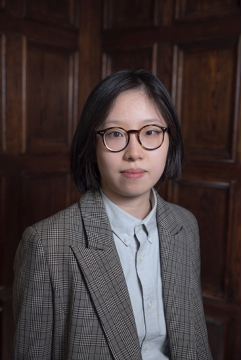
Ann Jiang (Ph.D. Student, UC San Diego)
Hi! My name is Ann Jiang. I am a Sociology PhD Student at UC San Diego. I study the intersection of culture, network, political sociology, and global sociology. Leveraging cases across domains, I am drawn to emerging, contested, and boundary-forming social relations. At the core of my research is a question: How do relational contexts shape our understanding of social difference? When, and Why? We often define social differences by drawing boundaries—between “us” and “them”—and attaching meanings to each. Sometimes, in conflicting ways. These boundaries can exacerbate or mitigate inequality. To unpack this, I connect external processes (group formation, networks, politics, markets) with internal ones (perceptions, beliefs, attitudes, and emotions). This lens helps me analyze how people conceptualize, contend with, and contest boundaries around those categories of social differences (related to, e.g., immigration status, nationality, and race). For example, I have examined boundaries through sexualities by linking network embeddedness to one’s meaning-making strategies.
My doctoral project focuses on the evolving social relations within immigration debates in the United States. It investigates a puzzle: why do some immigrants align with anti-immigration ideologies in a far-right era? By shifting the focus from immigrant-native dynamics to intra-immigrant interactions, I show how networks shape political attitudes and how exclusion operates within seemingly unified categories. Methodologically, I have developed projects using found surveys, computational text analysis, and interviews. My enthusiasm for sociological research methodology drives me to become a multi-methods researcher. Website: www.annjiang.org
If you see me at ASA, ask me about a Chicago food map. I lived in Chicago from 2022-2024!

Kurt W. Kuehne (Post-Doc, NYU Abu Dhabi)
Kurt W. Kuehne is a Sociologist and Postdoctoral Associate at New York University Abu Dhabi. With Anju Mary Paul and Bedoor AlShebli, he is studying the migrations of non-native scientists to emergent research hubs in the Middle East and East Asia. We explore how the global research landscape is shifting, and what this means for talent migration, geopolitical research competition, knowledge economies, and the development of science itself.
Kurt’s book project, based on an award-winning dissertation, examines politics and policy around the temporary/cyclical labor migrants who build and maintain the world’s rising global cities. The project builds upon 18+ months of ethnographic fieldwork on South Asian construction workers and Southeast Asian domestic workers and has been supported by the US Departments of Education and State, Andrew W. Mellon Foundation, SSRC, American Institute of Bangladesh Studies, and various research centers.
A third major pipeline of research is currently engaging the employers of domestic workers to learn about their hiring motivations, managerial decision-making, and experiences employing outsiders in their own private home. Kurt has won several teaching awards and serves on the non-profit board of Princeton in Asia. He holds a PhD (Sociology) and MA (Southeast Asian Studies) from the University of Wisconsin-Madison, and an AB (Politics) from Princeton University.
If you see me at ASA, ask me about my lab scientist parents’ many mind-boggling stories working with the world’s deadliest pathogens (e.g., they’re characters in Outbreak and The Hot Zone). Fun science stories for all of us SKATerinos!
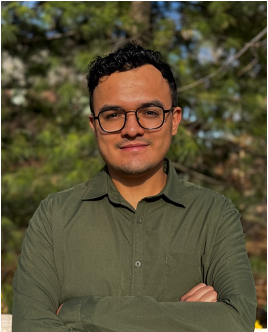
Jorge Ochoa (Ph.D. Candidate, Northwestern University)
Jorge Ochoa is a PhD candidate in the Dept. of Sociology at Northwestern University. His research examines science and technology, sexuality, and health, from the vantages of cultural and political sociology. In the first years of graduate study, Jorge completed a qualitative project about queer subcultural responses to health crises. Specifically, he studied how Chicago’s kink scene confronted COVID-19 and Mpox by creatively reimagining safer sex, transforming sites of pleasure into sites of health mobilization, and more—often in ways that reactivated and reworked earlier strategies of community response to HIV/AIDS. Jorge’s latest research examines contemporary U.S. disputes over the integrity of science and government in which various factions—from anti-vaccination activists to “Stand up for Science” demonstrators—make competing claims about how truth and democracy are being subverted, ultimately in a tug-of-war over the epistemic and normative foundations of our sociopolitical order.
He previously worked in public health, bioethics, and science and technology policy roles at multiple government agencies including the New York City Department of Health, the National Institutes of Health, and the White House Office of Science and Technology Policy. Jorge received his B.A. from Columbia University in Neuroscience and Behavior from the Dept. of Biological Sciences and the Dept. of Psychology, with a second major from the Center for the Study of Ethnicity and Race.
If you see me at ASA, ask me about… my favorite sci-fi series (hint: it started as a super-hero comic book and is premised upon genetic mutation).
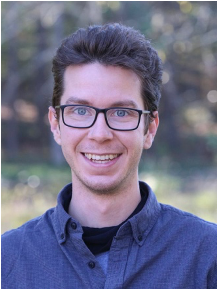
Garrett Ruley (Ph.D. Student, Princeton University)
My research interests include equity and belonging in math and science education, science and technology policy, and the liberatory potential of the STEM disciplines. I am particularly interested in exploring how political and economic power influence, benefit from, and/or are challenged by science and the narratives around it.
As research and academic infrastructure are attacked and dismantled under the current federal government, I am studying historical analogues to understand how researchers can best safeguard their communities, address public distrust of research and expertise, and rebuild scientific infrastructure to be more inclusive and resilient.
If you see me at ASA, ask me about dancing Argentine Tango.
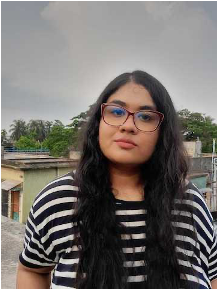
Bijoyetri Samaddar (Ph.D. Student, University of Wisconsin-Madison)
My academic interests are rooted in understanding how sociological phenomena, particularly social inequality and collective behavior, are shaped by the dynamic interplay of meaning, institutions, and emergent social structures. I am fascinated by the concept of “construct drift” or “fractured equilibrium,” where the semantic meaning of core social constructs, such as “trust,” “fairness,” “empowerment,” or even “accuracy”, becomes unstable and context-dependent across diverse cultural, historical, and technological landscapes. My research explores how this interpretive instability can lead to a “fractured Nash equilibrium,” where behavioral patterns persist not due to aligned incentives but because the conceptual scaffolding that makes action intelligible has splintered into divergent meaning systems.
Drawing on my experience with large-scale randomized controlled trials in India, I investigate how shifts in meaning undermine the validity of causal claims and policy interventions. I employ a mixed-methods approach, combining ethnographic insights from street-level bureaucracy, advanced quantitative methods like Multidimensional Item Response Theory (MIRT) to detect latent divergences in construct interpretation, and game-theoretic modeling to analyze the implications of these meaning shifts for strategic interactions and social outcomes. Ultimately, I bridge psychometric precision with sociological depth, ensuring that causal inferences are not only statistically robust but also semantically coherent and ethically grounded in the diverse social worlds we seek to understand.
If you see me at ASA, ask me about the most unexpected way a “lost in translation” moment led to a new research idea in rural India!
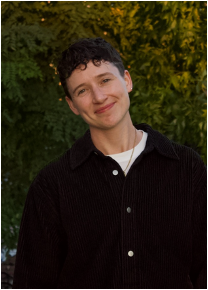
Carlo Sariego (Ph.D. Candidate, Yale University)
Carlo is a PhD candidate at Yale University in the joint program in Sociology and Women’s, Gender, and Sexuality Studies. They are an interdisciplinary sociologist whose research and teaching span gender and sexuality studies, transgender studies, medical sociology, feminist science and technology studies, and the racialized histories of medicine. They use qualitative, feminist, and queer methods to analyze how racialized and gendered social, cultural, and historical processes shape the politics of reproduction and family in the United States.
Their dissertation, Transsexualizing Reproduction, draws on legal cases, historical analysis, and interviews with transgender people to examine how trans reproduction and gender-affirming care are governed, imagined, and desired. Working at the intersection of sociological theory and speculative inquiry, Carlo explores how reproductive systems are navigated by those often excluded from their design.
Their work appears in Feminist Theory, Signs: Journal of Women in Culture and Society, Social Science and Medicine, Population Studies, and the edited volume Seminal: On Sperm, Health, and Politics (NYU Press, 2025). They received their MPhil with distinction from the University of Cambridge as part of the Reproductive Sociology Research Group (ReproSoc), where they studied under Professor Sarah Franklin, and earned their BA from Sarah Lawrence College in 2017.
If you see me at ASA, ask me about knitting and fiber art/doll making! I love to knit and like to make creepy little objects
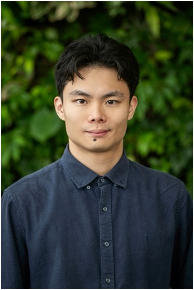
Yanze Yu (Ph.D. Student, Columbia University)
Hi! I’m Yanze Yu, a second-year Ph.D. student in Sociology at Columbia University, and a research fellow at The Trust Collaboratory and the Center on Organizational Innovation (COI). Starting this fall, I am also excited to serve as the student coordinator for the SKAT Workshop in our department. My research lies at the intersection of medicine, SKAT, and political economy. I am particularly interested in the relational making of pharmaceutical artifacts, expertise networks, embodiment, and valuation regimes within the broader process of “medicalization”. My current work spans a diverse range of conditions. I am conducting two independent studies: (1) the pharmaceuticalization of tic disorders and ADHD in China, and (2) rare disease classification and orphan drug development in China. I am also involved in two collaborative projects: (1) the co-production of expertise surrounding Long COVID, and (2) the contagious spread of TikTok Tics during the COVID-19 pandemic in the United States. (More at yanze-yu.notion.site)
I am the founder of the China Reading & innovation Lab (CRiL) at Columbia—an initiative that promotes scholarly exchange and facilitates interdisciplinary collaboration, especially in the medical field. We welcome colleagues and new friends to join future events (more at cril.notion.site).
Prior to Columbia, I earned an M.A. in Chinese Studies from the University of Michigan and completed my LL.B. in Sociology at Fudan University. Embracing life as both a New Yorker and a new Shanghainese, I take pride in my roots in Michigan and Fujian 🙂
If you see me at ASA, ask me what would you like to do with CRiL~THRiL in NYC! (More at cril.notion.site)

Shira Zilberstein (Ph.D. Candidate, Harvard University)
Shira Zilberstein is completing her PhD in sociology at Harvard University where she was also a former Science and Technology Studies Fellow. Her scholarship lies at the intersection of cultural sociology, science and technology studies, and organizational sociology. She uses qualitative methods to examine the moral, organizational, and social dimensions that shape the production of knowledge, science, and technology with particular attention to how knowledge gains authority across institutional boundaries. Her current research investigates interdisciplinary collaborations in applied AI research and how knowledge is put into practice to define and address social problems. Focusing on researchers and labs developing machine learning models for healthcare, she draws on interviews, ethnography, and extensive document analysis to show how technical experts moralize AI innovation as central to solving societal problems, even amid uncertainty and contested outcomes. She examines how clinical and technical researchers determine which healthcare issues are appropriate for AI intervention, how they navigate organizational demands and resource constraints, and how they construct professional coalitions that frame them as moral actors advancing responsible technological governance.
Her research contributes to broader debates about morality, legitimacy, organizations, science, and innovation. It explores how research communities grapple with the limits of technological solutions while sustaining enduring commitments to innovation as a mode of social intervention.
If you see me at ASA, ask me about my favorite place to visit in a new community.
 Welcome to the official website of the Science, Knowledge, and Technology (SKAT) Section
Leave a comment