
By Cristian Morales, for the Fall 2022 SKAT Newsletter
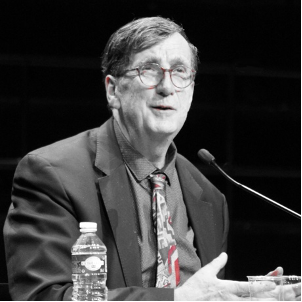
In July 1984, thirty prominent sociologists, historians, and other scholars met for a workshop at the University of Twente that would lead to the famous volume: “The Social Construction of Technological Systems”. At this workshop were luminaries such as Trevor Pinch, Wiebe Bijker, Thomas Hughes, Harry Collins and many others, among them the French philosopher Bruno Latour. In the anniversary edition of the volume, a striking anecdote is included that speaks to both Latour’s skill and his personality: As one workshop participant was presenting their paper in French, Latour, “hastily summoned and not even with a seat at the table” began translating the paper into English for the American, English and Scottish members of the audience. “As soon became apparent to the two Dutch onlookers, Weibe [Bijker] and Gerard de Vries (who being Dutch, understood both French and English), Bruno was not only translating Michel [Callon]’s paper but adding his own gloss on the issues.” An often polarizing figure in the field of STS, no one could deny Latour’s steadfastness to ‘adding his own gloss to the issues.’
Bruno Latour was born in 1947 in Beaune, Burgundy, France to a storied winemaking family, where he was the youngest of eight siblings. Not interested in going into the family business, Latour would go on to study philosophy and anthropology and would earn his doctorate in theology from the Université de Tours in 1975. Latour was a professor at the École Nationale Supérieure des Mines from 1982 to 2006, before moving to Sciences Po Paris where he would remain until his retirement in 2017.
Latour’s scholarship and interests spanned an incredible breadth, but to STS scholars and SKAT members, Latour will undoubtedly be best known as one of the primary developers of actor-network theory (ANT). The ANT insistence that nonhuman actors are equal to human actors in their abilities to participate in their network of relationships and that they should be treated by scholars as such was, to put it mildly, radical. These ideas, first developed in Latour’s 1979 “Laboratory Life” and later more formalized in his 1987 “Science in Action”, still inspire vigorous discussion and debate decades later. Regardless of any scholar’s views toward ANT, Latour’s impact on the STS field and its scholars today is undeniable. For his work in these areas of scholarship and others, Latour was awarded the Holberg Prize in 2013 and the Kyoto Prize in 2021, often described as the respective Nobel Prize equivalents in the humanities and social sciences.
In his last decade of work, Latour focused much of his attention on art and the environment, among other areas, curating art exhibits, writing a number of theatrical pieces, and publishing “Facing Gaia: Eight Lectures on the New Climatic Regime” in 2017 and “Down to Earth: Politics in the New Climatic Regime” in 2018.
Religion, faith, and what comes after death is a topic of debate only slightly more contentious than actor-network theory was at times. A practicing Roman Catholic, Latour wrote his “Rejoicing, or the Torments of Religious Speech” in 2002 to develop a way of writing that better represents religious speech, and which includes the sentence below. Although we may never know about the first half of his line, we know the second half to be true because they were present in Latour himself:
“There is no control and no all-powerful creator, either – no more ‘God’ than man – but there is care, scruple, cautiousness, attention, contemplation, hesitation and revival.”


Leave a Reply