
Every year we publish profiles of some of our SKAT section student and post doc members to highlight the important work that they are doing. Below, see the bios of eleven of our early career SKAT scholars.
If you see them at the ASA annual conference, SKAT pre-conference, or other upcoming programing, remember to say hi!
Sayan Bhattacharjee (PhD Candidate, Human Centered Design and Engineering, University of Washington)

I’m a doctoral candidate in Human Centered Design and Engineering at the University of Washington, where I study technical systems alongside the people, politics, and institutions that shape them. My dissertation traces the trajectories of two skin tone scales: the Fitzpatrick Skin Type scale and the Monk Skin Tone scale in AI fairness research across imaging, biometrics and dermatological AI. Specifically, I examine the conditions under which social critique becomes technical reform (or not), and how sociological insights are translated into technical instruments.
Additionally, I have co-led community focused research for an offshore wind study funded by the U.S. Department of Energy. Across projects spanning AI, energy, and scientific infrastructure, I bring an analytical lens strongly rooted in STS (Science and Technology Studies) and critical computing, skills in employing rigorous qualitative and mixed methods, and a commitment to shaping technology that is equitable and accountable.
Website: https://sayanbe.com/
Mariia Chetverikova (PhD Candidate, Sociology Department, University of Illinois Chicago)

Mariia Chetverikova is a PhD Candidate in Sociology at the University of Illinois Chicago. She studies knowledge under political pressure — how scholarly fields remake themselves in crisis, how cultural production circumvents censorship, and how archives hold the memory of repression and resistance. Her dissertation traces the reconfiguration of Slavic, East European, and Eurasian Studies (SEEES) in U.S. academia after Russia’s 2022 invasion of Ukraine, drawing on interviews with displaced and U.S.-based scholars, conference fieldwork, and archival analysis.
This year at ASA, she presents “The Double Bind of a Field in Crisis,” a paper based on 41 interviews with SEEES scholars across the field. It argues that the invasion destabilized an epistemic hierarchy long anchored in Russian institutional prestige, yet change has been uneven: departments face an administrative demand for Russian-centered courses that reliably enroll alongside a scholarly demand to de-center Russian. They manage this by decoupling structure from practice in two opposite directions, extending decoupling theory to organizations answerable to two audiences at once.
She will be on the job market next year.
Margaret R. Eby (Postdoc, Medical Ethics & Health Policy, University of Pennsylvania)

A sociologist by training, I study the construction of ethical responsibility around new technologies from early 20th century eugenics to artificial intelligence in healthcare settings. My work has been published in Social Science & Medicine, Big Data & Society, Work and Occupations, PLOS One, and the Los Angeles Review of Books, among others.
Nayun Eom (PhD Student, Department of Sociology, Harvard University)

My research interests center around the political economy of technology, care work, and the welfare state. I am interested in how government and market actors develop technological “solutions” to fill gaps in care labor, including AI and robotics that attempt to automate elderly care. In a recent interview-based study, I examined how welfare agency bureaucrats evaluate care technologies created by startups in the US in the procurement process. My dissertation will expand this to a cross-national project, comparing approaches in the US and East Asia.
In another line of work, I use survey data to examine the impact of workplace automation technologies on the wellbeing of service workers in the US. At the broadest level, I seek to understand the social consequences and implications of the many attempts to replace or augment undervalued human labor with technology.
Hsu Huang (Postdoc, Center for Economy and Society, SNF Agora Institute, Johns Hopkins University)

I’m a comparative sociologist studying science, knowledge, technology, and political economy in East Asia and Eurasia. I’m currently working on a book project based on my dissertation that examines the emergency COVID-19 vaccine development in China and Russia. I’m concurrently working on a few other projects on the “culling” of individuals in hierarchical organizations across different societies and historical contexts.
Haley Lepp (PhD Candidate, Education, Stanford University)

I am a PhD candidate at Stanford University studying the relations between the technology industry and higher education institutions. My ethnographic dissertation examines how a group of academic computer science research labs engage with rising industry power, especially as experienced through a collapse in peer review and movement toward fame-based evaluation, the need for “diplomacy” with funders, faculty absenteeism and movement of labs into industry, and the ongoing devaluation of the work of women and racially minoritized researchers. These mechanisms suggest that rather than “democratizing” education, industry influences in this site may contribute to the consolidation of elite social networks.
I situate my work at the intersection of Science and Technology Studies, Organizational Theory, and the Sociology of Education. I have also published mixed-methods work on language ideologies and AI adoption for scientific writing, and have a long-standing interest in how English hegemony intertwines with innovation and adoption of new media technologies.
My work has been published in ACM FAccT (Best paper award 2025), Nature Human Behavior, and The Annals of the American Academy of Political and Social Science (forthcoming), among other venues. Prior to my PhD, I worked as a Natural Language Processing engineer and built digital education programs for students in Jordan, Iraq, and the U.S. I hold an M.S. in Computational Linguistics and an M.A. in Sociology. I am the chief union steward for graduate workers in Stanford’s Education School, Law School, and Business School.
Xiaoting Lu (PhD Candidate, Sociology, the University of Virginia)

Xiaoting Lu is a Ph.D. candidate in Sociology at the University of Virginia. Her research examines how financial institutions, policy expertise, and market devices shape technological and industrial transformation, with a regional focus on China. She is particularly interested in the relationship between finance and technological development: how late-developing economies engage with the knowledge economy, how investors evaluate and shape the digital economy and technology entrepreneurship, and how policymakers distinguish between productive and speculative forms of finance around technological innovation.
She approaches finance itself as a set of institutional, calculative, and epistemic technologies. Her work examines how financial logics and infrastructures refigure state capacity and make particular firms and industries visible, valuable, and investable. Her dissertation develops this perspective through a study of the changing role of finance in China’s transition toward innovation-led growth, including the expansion of venture capital and private equity, the political and expert construction of financial risk, and industrial policies to redirect capital toward technology, green industry, and other policy priorities. Across these projects, she investigates how governments, financiers, and firms define and negotiate value, efficiency, productivity, and risk.
More broadly, her academic interests include economic sociology, science and technology studies, political sociology, and the sociology of development. She uses archival and policy research, interviews, and text analysis to study the co-evolution of financial power, technological change, and state capacity.
Max Lubell (PhD Candidate, Department of Sociology, University of Texas at Austin)
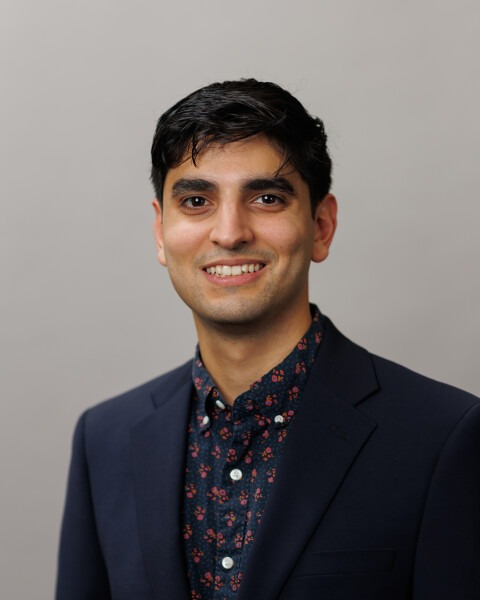
Max Lubell is a doctoral candidate in the Department of Sociology at the University of Texas at Austin. His research uses quantitative and qualitative methods to study the proliferation of surveillance technology in society. Specifically, he focuses on how a private marketplace of consumer surveillance products (e.g., Ring, Vivint, and SimpliSafe) and algorithmically driven neighborhood platforms (e.g., Neighbors, Nextdoor, and Facebook) provide ordinary citizens with a set of tools for enhancing community safety. His work shows how digital participatory surveillance can simultaneously foster collective efficacy between neighbors and racial criminalization through online narratives that mark people of color as “suspicious” persons. He situates this work in suburban neighborhoods undergoing racial and socioeconomic change that he shows are associated with higher surveillance activity. Accordingly, this project shows how the retreat from overt forms of suburban segregation is accompanied by subtler forms of digital gatekeeping that allow suburbs to achieve formal integration while maintaining local racial and class hierarchies.
Max approaches his research as a mixed methodologist, drawing on spatial analysis, interviews, and ethnographic observations to connect broad patterns of social stratification to the social forces that reproduce them. In doing so, his work highlights how major shifts in American society—the advent of surveillance technology and growth in racial diversity—converge to reproduce social inequality. More broadly, his research agenda explains how algorithmic, smart home, and automated technologies are reshaping the social institutions that structure everyday life. As scholars debate the extent to which American communities are characterized by increasing social isolation, his work shows how digital technologies create active forums for neighborhood interactions and the enforcement of symbolic boundaries. Max’s research has received external funding and awards from the National Science Foundation, American Sociological Association, and Horowitz Foundation for Social Policy.
Teddy Zamborsky (PhD Student, Sociology Department, Columbia University)

Teddy Zamborsky is a second year PhD student in the Sociology Department at Columbia University. His research examines the relationship between scientific theories of pain and the death penalty in the USA. His work draws on science and technology studies, sociology of expertise, and sociology of medicine. He also organizes a working group on the sociology of death (feel free to email if you’d like to participate). He is broadly interested in interview and archival methods as well as text based computational methods.
Teddy earned his MSc in Science, Technology and Society at University College London in 2024. Prior to pursuing his master’s, he worked in the tech industry for five years and earned his B.S. in Mathematics from the University of Chicago.
Jun Zhou (PhD Candidate, Sociology, University of Michigan)

Jun Zhou is a doctoral candidate in Sociology at the University of Michigan, with a graduate certificate in Science, Technology, and Society. Spanning economic sociology, gender, labor, and STS, her research is unified by an interest in the gendered foundations of political economy. A historical and comparative ethnographer, she pairs fieldwork with archival research to ask how the digital revolution is remaking women’s labor, and with it, inequality and family life.
Her dissertation, Dancing with Metrics: The Digitalization of Women’s Labor in China, examines China’s trillion-dollar live-commerce industry, the largest platform employer of women in the world, through five years of research, including fifteen months of fieldwork in Hangzhou, embedded work as a livestreaming assistant, and 141 interviews. Tracing what she calls the “”metricization of work,”” the reorganization of labor around continuous measurement, the dissertation follows metrics from the labor markets platform firms design, through the gendered labor performed inside them, to the automation of that labor by AI and its reach into intimate life. Her research on how AI avatars are built from the very metrics that rate the women they replace received an honorable mention for SKAT’s Hacker-Mullins Student Paper Award, and related articles appear in Work and Occupations and Big Data & Society.
Jun is on the 2026–27 academic job market and will be at ASA; she’d love to connect.
Shira Zilberstein (Postdoc, Princeton University)

Shira Zilberstein is a post-doctoral associate at Princeton University. Her research investigates the moral and organizational foundations of knowledge production, with particular attention to how science and technology are used to define and address social problems. Her current work focuses on the development and governance of AI models for healthcare. Using qualitative methods, she studies how researchers and practitioners justify and seek to ensure the “goodness” of their pursuits. She is especially interested in how research communities navigate uncertainty and sustain commitments to technological innovation in the face of contested outcomes and recognized limitations.
Shira holds a PhD in sociology from Harvard University, where she was a Science and Technology Studies Fellow and a BA in Sociology and History from Northwestern University. In addition to her academic scholarship, she has collaborated with researchers at MIT, Duke, and Yale on projects related to the development and governance of healthcare AI. At Princeton, she is affiliated with the Center for Information Technology Policy and the Princeton Societal AI Initiative.

