Research Brief by Daniel R. Morrison and Monica J. Casper
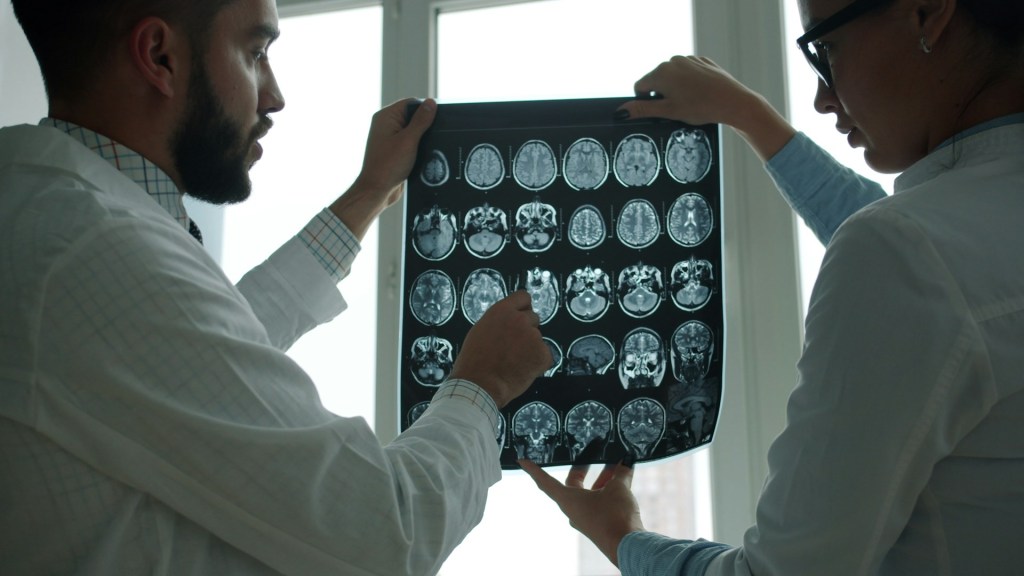
We have been studying the social worlds of traumatic brain injury (TBI) and chronic traumatic encephalopathy (CTE) for fifteen years. In this work, we examine the social and political lives of TBI and CTE as they have moved in and out of public consciousness and up and down the list of funding priorities from federal agencies, such as NSF and DOD. Along the way, we have noted meaningful patterns in scientific and popular discourse around brain injuries, including increased attention to how these injuries often result from racialized and gendered violence.
As sociologists of science, technology, and medicine, our investigation of this world led us to a striking insight: over the course of approximately three decades, previously highly separate communities of scientists, researchers, and activists converged around a shared understanding of brain injuries as a critical concern. We call this phenomenon problem convergence. For us, problem convergence is a non-linear social process characterized by active communication, interaction, and negotiation among separate collectives who, over time, turn their attention to a common problem. That problem then becomes a core concern for each collective.
Problem convergence is not interdisciplinarity. Interdisciplinary research groups, centers, and the like focus on one problem, generally addressing that problem with multiple methods, theoretical traditions, and multiple researchers from several academic disciplines. Often, interdisciplinary research focuses on “wicked problems” that are multi-pronged, result from distributed individual and collective actions, and are bound up in large, complex social systems that govern the lives of millions or even billions of people. A paradigmatic example here is global warming/climate change. In academic versions of climate change interdisciplinarity, researchers with training in earth sciences, meteorology, geology, environmental studies, sociology, and more address a common problem. This often entails creating research projects under the auspices of an interdisciplinary center, whether housed within a university, across universities, or as a private, often non-profit, organization. To use a common metaphor, each discipline addresses one part of a large elephant, understanding their piece as distinct. The language of global warming/climate change allows these researchers to see themselves as part of a larger, collective process that we label interdisciplinarity.
In problem convergence, previously separate research groups and thought collectives turn their attention to a shared concern. They come to share a work object, which Casper theorized as a material entity through which individuals and groups make meaning and organize their professional and social practices. Generally, however, each group retains their independence in publishing and organizational affiliation. In other words, when it comes to TBI and CTE, neuroscientists still publish in neuroscience journals and work with other neuroscientists. They may rely on samples of patients who experienced TBI from Intimate Partner Violence (IPV), sports, or as a consequence of military service, but they do not often develop independent research centers that employ, for example, psychologists, trauma counselors, and sports medicine physicians. Centers that do exist often feature researchers from one discipline rather than many.
In future briefs for the SKATOLOGY newsletter, we will provide specific details on how problem convergence works, showing how diverse research and activist groups refocused their attention on TBI and CTE as shared concerns. These briefs will draw from our research on sports- and IPV-related TBI with attention to gendered and racialized aspects. TBI and CTE are not equally distributed in the U.S. For example, Black American men and women are over-represented in the US Army compared to their population in the civilian labor force, and thus are subject to increased exposure to TBI in training, live fire, and accidents. Such disparate impacts, as we will show, become an impetus for researchers and activists to converge and address the problem of brain injury.
Daniel R. Morrison is an Associate Professor and Chair of the Department of Sociology at the University of Alabama in Huntsville.
Monica J. Casper is a Professor of Sociology and Dean of the College of Arts and Letters at Seattle University.


Leave a Reply