
Interviewed by Jorge Ochoa on November 25, 2025
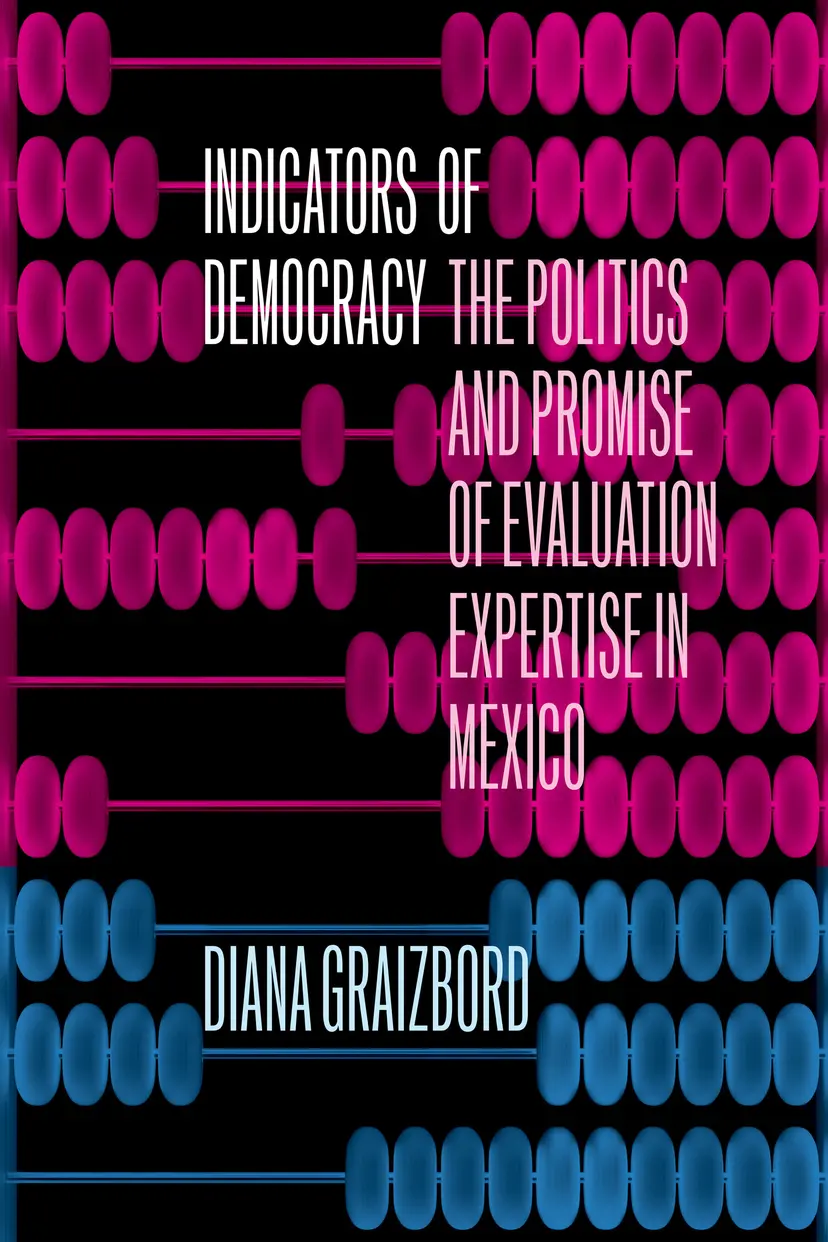
Diana Graizbord is an Associate Professor of Sociology and Latin American and Caribbean Studies at the University of Georgia. Her first book, Indicators of Democracy: The Politics and Promise of Evaluation Expertise in Mexico, was published by Stanford University Press in 2024. Graizbord is currently a Visiting Fellow at the Kellogg Institute for International Studies at the University of Notre Dame for the 2025-2026 academic year and previously was a Member of the Institute for Advanced Study in Princeton.
Jorge: Thank you for taking the time to speak with me today. To begin with, I would love to hear how you came to be interested in studying the world of monitoring and evaluation? And the case of Mexico’s Council for the Evaluation of Social Policy (CONEVAL) in particular?
Diana: Thank you so much for having me and for taking the time to read the book, engage it, and engage me in this conversation. I really appreciate it. This is one of the questions I love because I think big research projects often have an autobiographical element. Certainly first book projects tend to have an autobiographical element. Mine has two starting points. One of them is really autobiographical: Before I started my PhD in sociology, I was working in the field of monitoring and evaluation. I was a participant in the production of the kind of expertise that I ended up studying during the PhD and for the book. I came to work in monitoring and evaluation sort of by accident, because I was interested in international development, poverty, inequality, and related questions. But the field of monitoring and evaluation, at least in its overlap with international development, was booming and like many early career people I was channeled towards monitoring and evaluation.
At the same time, I was working towards a master’s degree in International Affairs at the New School. And as a Mexican and as someone interested in poverty and inequality in Mexico, I was studying the case of Progresa/Oportunidades, the famous conditional cash transfer program that, in part, became famous and a gold standard for poverty intervention because of its evaluations. It was one of the pioneer conditional cash transfer programs, but also a pioneer in using randomized control trials—what has become the gold standard for evaluation, with Nobel Prizes awarded around this particular technique for evaluation.
I started my PhD thinking that I would go back to working in the international development, poverty space and discovered, as one should during early graduate school, that I could also take that field as my object. Rather than being a participant in the world of monitoring and evaluation, I could take monitoring and evaluation as an object of sociological analysis. The intellectual starting point for this project was both critical development studies—anthropological and sociological work on the development enterprise and the institutions and organizations that promote that—and science and technology studies, my encounter with the idea that I could take expertise, including the particular kind of expertise that I had been a producer of, as an object of study.
So I came to this project both biographically, because I was participating in that world, and then also because I wanted to understand how it was that this policy, Progresa/Oportunidades, the conditional cash transfer program, had become a global model. What could explain its success despite the chronic and persistent poverty in Mexico? The answer that I arrived at, and that others arrived at as well, was that its success had to do with the kinds of expertise mobilized around it.
Jorge: It’s a great convergence of historical developments and your own background. A key concept in your book is technodemocracy. Could you explain what you mean by technodemocracy, including its difference from the idea of technocracy, and also how it relates to Mexico’s struggle for democratization?
Diana: I think of technodemocracy as a techno-political imaginary and related set of practices. Here I’m following Charles Taylor and others, and in STS, Sheila Jasanoff and others. There’re two ways of tracing the concept of imaginaries—one more philosophical and one more in STS. I think about technopolitical imaginaries as ways of thinking about the power and potential of technologies in bringing about political projects. That’s kind of the Sheila Jasanoff way of thinking of it. In the particular context I study, technodemocracy names how a set of techniques, monitoring and evaluation, are ascribed political potential. The political potential and promise attached to monitoring and evaluation, in the context in which I studied it, was democratic. There are two parts to the concept. The “techno” or the “technical” in the concept refers to the techniques of monitoring and evaluation. The “democratic” refers to how those techniques get embedded in a democratic political project and assigned a series of democratic capacities or potentialities. Those democratic capacities are also worth defining, because we can think of democracy in many ways. As I write in the book, the democratic ideal to which technodemocrats aspire builds on ideas of democratic “consolidation” and a “transition” to democracy framework that has dominated discourse and political practice in Mexico. This has to do with a consolidation of liberal institutions, an expansion of rights, a deepening of democracy, and especially with transparency and accountability.
How does it differ from neighboring concepts like technocracy? Here I was really thinking with and against the literature on technocrats and technocracy in Latin America. Lots of what we know about technocrats comes from the Mexican context. There are so many important studies of how technocrats do their work, their relationship to democracy, the colonization of the state by economists that focus on the Mexican case, and the Chilean as well. Studies of Mexico by Miguel Centeno and others detailed the technocratization of the Mexican state in the 1970s, 1980s, and into the 1990s. I began my research with this image of the state and technocracy provided by that earlier generation, and I was trying to make sense of that against what I was seeing ethnographically. I build on that scholarship, and I’m so grateful for it. But it really was focused on how economic styles of thought moved into other fields—an economization of policy, including social policy and poverty—coeval with the neoliberalization of the Mexican state, which prioritized the accountancy and efficiency standards that we think of as part and parcel of neoliberalization. But what I was seeing was different. The technodemocrats I write about inherited some styles of thought and methods. They prioritized efficiency and had a penchant for quantification. But they were also serious about their own commitments to democracy, rights, participation, and about opening up spaces for transparency. That was qualitatively different. There was a democratic aspiration which melded with the trust in their own expertise as a way to bring those aspirations to fruition. I see that as qualitatively different. These technodemocrats also occupied a different space within the state. If we think about technocrats in the Mexican case as initially operating at the highest level and coordinating a kind of old, entrenched bureaucracy downwards, the folks that I write about, some of them are at the top, but a lot of them were mid-level analysts and bureaucrats, running the backstage, infrastructural aspects of the state. In the book I detail the democratic imaginary attached to the technical aspects of policy evaluation and also the placement—where the technical experts are within the state, and the professional and academic trajectories that they had to get there.
Jorge: Your conceptual work highlights both the continuity and change in nice ways. I also appreciated your ethnographic attention to feelings of civic duty, responsibility, hopes, desires, normative expectations and the like. What do we learn about the politics of evaluation when we zero in on these dimensions, the realm of subjectivity?
Diana: This is such a good question, and I don’t think it’s as developed in the book as I’d like. This is an aside, but after publishing the book, right now for a new project, I’m engaging with the sociology of morality. It’s really helping me think back to some of the moral and affective frameworks that I touched upon but did not develop so much in the book. The feelings among those I worked with and their commitments to doing good and doing the work of democracy were palpable, and they were real, right? It was not just discursive justifications of their work. These were folks that had left—some of them, young people—that had left lucrative careers in banks and finance to come and work in the CONEVAL, a state institution, because they thought that the work that they were doing there was good work, work that was contributing to the democratic politics that they cared about. A sense of civic duty was not just a discursive justification or moral framework attached to the work after the fact. It was motivating and had material consequences for folks. That’s part of it. The other part is—and I talk a little bit about this with Luciana de Souza Leão in our Politics & Society piece—the cultural work of the state. Even going back to Weber, we know that states are also made up of feelings and motivations, people muddling through and being anxious about both their own personal projects and the politics that they care about, and that’s just true. We know that about bureaucracy, and we know that about technocrats. And if you do ethnographic work, it becomes very palpable. One of the reasons why it took me so long to write the book, I think, was because I ended up really liking the people that I worked with and felt a commitment to both expressing the critiques I had and the admiration I had for their hard work and their political commitments, even while criticizing them from my cushy place in my office.
There’s a kind of theoretical question here about how we think about the state and policy and its cultural dimensions. But there’s also an ethnographic dimension which is, you can’t help but write about duties, hopes, and desires if you do ethnographic work because people will share their anxieties and aspirations. They tell you about how little money they make and how stressed they are and how much money they used to make, and that they took the cut because they care.
Jorge: I found the normative dimensions super fascinating. One of my favorite parts is chapter 5, “Engaging Risky and Replicating Publics,” where you discuss the relationship between publics and state expertise. How are the two groups you identify—specialized civic society actors, on the one hand, and beneficiaries, on the other—differently situated within Mexico’s enterprise of monitoring and evaluation of social policy?
Diana: I want to give credit where credit is due. This chapter really builds on other people’s work, including the two concepts that you just mentioned. I found the work of Monika Krause on the social history of the beneficiary super helpful, even though she’s talking about a different context and a different historical moment. On the question of specialized civil society, this is a concept that is used in practice in Mexican politics, especially in the context of consulting with civil society. It’s one that Analiese Richard, an anthropologist at the UAM in Mexico, introduced me to. She’d written a piece about it, which was clarifying for me. So that’s important to say.
This chapter you ask about goes back again to the technodemocratic imaginary. One of the normative commitments that at least those working within the CONEVAL had—because these sometimes clash with some of the projects pursued by other state actors or academics they must work with—was to make monitoring and evaluation useful: useful for, among other things, holding the state accountable and rights claiming. These are things that we think are important for democratizing the state, and they wanted monitoring and evaluation to serve as a currency in the relationship between citizens and the state, a tool citizens could use to make claims to the state about rights and then holding the state accountable for responding. But one of the tensions they grappled with and were aware of is that these claims-making ordinary citizens never figured in monitoring and evaluation. Their civil society partners, their actual citizen interlocutors, were specialized elites and technocratic actors within civil society. These were the folks that were appreciative of monitoring and evaluation, that participated in the making of it, and that were deemed equipped with the expertise necessary to put monitoring and evaluation to use. The so-called ordinary citizen was absent from both the production and circulation of monitoring and evaluation. So instead of this ordinary citizen, I write about two stand-ins. One is specialized civil society. These are think tanks, organized NGOs that are producing reports about what the state is doing in various policy realms. These are data journalists, people like that. And then, on the other hand, we have beneficiaries. Beneficiaries are the recipients of social policy; they are key for evaluation. Beneficiaries are the ones whose behaviors are being monitored and measured, whose incomes are being calculated, and whose schooling years are being quantified as evidence of whether the state is doing or not doing what it’s supposed to. And because of this beneficiaries, as recipients of social programs, come into monitoring and evaluation as providers of data, as data inputs into the process of producing monitoring and evaluation—but ones that are both necessary and risky. One of the things that evaluation experts I write about have not been able to shake from previous generations, is a paternalistic distrust of the poor. So they are like, “Evaluation is important because we are giving voice to beneficiaries. We produce monitoring and evaluation as an input into their rights claims. Etcetera.” But also, “They lie to us. They tell us they don’t have TVs when they do have TVs. They lie about how much income they have. They say they’re going to the clinic for checkups when they don’t. Etcetera.” There is a kind of double-sided anxiety, anxiety about producing something useful for them, and on the other side like, “We need to talk to them, we need to measure them. But they lie to us and they’re untrustworthy.”
Jorge: The program itself is trying to intervene in stratification, ultimately, but at the same time is reinforcing a stratified public.
Diana: And it’s super interesting, some of the ethnographic descriptions I provide are of meetings in which people say, “This is giving voice.” But then they’re also like, “Oh, remember that paper?” There’s this academic paper written by two economists that circulates that stands in as evidence that poor people are always lying to evaluators about how much they have or don’t have. And they take that paper really seriously. It’s like a proof of concept, that they have to be careful, that we can’t just interview beneficiaries. We have to find data to stand in for the beneficiaries, because if you interview them, they’ll lie to us. In contrast, specialized civil society stands in as empowered interlocutors in the expert field of monitoring and evaluation. And there is no “ordinary citizen.”
Jorge: In the conclusion, you write that technodemocracy is tenuous yet tenacious in character. Could you share what you mean by this, including in light of the dissolution of CONEVAL in late 2024?
Diana: I have been grappling with this question myself. What I meant by tenuous and tenacious in the book is that monitoring and evaluation as wrapped up in a technodemocratic imaginary—an imaginary about the prospects and paths of the democratic consolidation project—really had a hold, and really continues, actually, to have a hold on many of the same people that are now lamenting the end of the democratic transition. As part of the so-called democratic consolidation process monitoring and evaluation had and continues to have a hold. Technodemocracy is expressed in a belief in holding the state accountable through techniques of quantification and external, trustworthy evidence as tools for improving state function, state performance, and moving the state towards more democratic goals, whether goals of transparency or goals of rights and redistribution. I think that that’s still alive and well, and we saw it in the responses to the threats on CONEVAL over a number of years and then its final closure. Those responses came from specialized civil society that we’ve just been talking about, think tanks, journalists, and elite academics who had worked with CONEVAL for years and believed in the project. That’s what I mean by a tenacious hold: this aspiration that a set of techniques and tools are and should be an input into a more democratic future. This continues to hold.
I didn’t foresee the ultimate closure of CONEVAL, but I guess we’re not in the business of prediction. But the agency and the work they did was always tenuous in the sense that it was institutionally precarious. Unlike other cases, like what Luciana de Souza Leão describes in the case of Brazil, or other Latin American cases where monitoring and evaluation hasn’t been institutionalized within the state, Mexico did institutionalize monitoring and evaluation, giving it a kind of importance. Yet, the institutionalization was partial: programs had to be evaluated but evaluation findings were never legally binding. CONEVAL was an autonomous organization that did not, like some of its peers, benefit from being constitutionally autonomous. The normative legal infrastructure that might have protected CONEVAL was left undone. Even though monitoring and evaluation had this important role in politics, it was tenuous in the sense that there were always threats of ignoring or shutting down the enterprise. Part of the work of monitoring and evaluation experts in Mexico was always the work of convincing, selling their product, teaching others to do it, and distributing the expertise because of the precarity of their work. So that’s what I meant. In light of the current moment, I think maybe I overestimated the tenacity. Now CONEVAL has been dissolved, but the belief in the political potential of monitoring and evaluation remains, and is evident in the nostalgia for it, in the lamenting of its disappearance, and in the work of academics and civil society actors who are now taking up the work. In the aftermath of CONEVAL, some of the actors that I write about in the book have formed a coalition of universities and specialized civil society to take up the work of monitoring and evaluation in the absence of its institutional home within the state. This coalition also talks about democracy and about holding what they consider to be an autocratic regime accountable, re-democratizing. But it’s worth developing the question further at this moment. I feel like the book needs a coda.
Jorge: The core of it seems to be that the imaginary can outlive the institution, and that gives it some resiliency.
Diana: So now the actual task is being taken up by others, and they’re not going to have the same footholds within the state, and it’s going to be different. Yet monitoring and evaluation remains—now from outside of the federal bureaucracy—as a potential antidote to non-democratic practices of Morena, the current hegemonic party and regime.
Jorge: My final question, which you started to talk a bit about earlier, is what are you working on next? Any exciting projects you’d like to preview for the SKAT newsletter readership?
Diana: An interesting outcome of my relationship with CONEVAL is that I ended up doing an evaluation of a social program called Sembrando Vida. I’m writing a couple of papers using the data from that evaluation which are about how poverty bureaucrats working during the Andrés Manuel López Obrador administration implemented programs and got things done, in the context of austerity and in the absence of some of the accumulated technical, informational, and administrative capacities that the state had developed in a previous era. There’s lots of talk about how the current regime––AMLO and his successor, Claudia Sheinbaum––is hollowing out particular agencies and forging an attack on expertise, including CONEVAL. The project I’m working on seeks to understand how that is being negotiated on the ground, how program implementation and the work of frontline, street-level bureaucrats has been reshaped in the context of a political project that is pro-poor but which has dismantled the very capacities we think of as necessary for delivering. A paper I’m writing now tries to argue that in the absence of administrative capacities, a shared moral economy and justifications can come to fill the gap and become key to the state getting stuff done. Sociologists tend to think that administrative and technical capacities are necessary for program implementation. While that’s true, the program I’m writing about, Sembrando Vida, shows us that bureaucrats get things done because they believe in the project. They sacrifice, and they do the work. They deliver. They deliver to the poor despite the difficulties.
And then the other thing, a long-term project that I’m thinking about, has to do with state ignorance. We know a lot about state seeing and state knowing, but I’m interested in exploring the dynamics of ignorance and blindness of the state in the Mexican context.
Jorge: That’s great. They both sound really fascinating. I look forward to following your work. Thank you again for taking the time for this interview.


Leave a comment